
Homeowner guidance
Roofing Materials Guide.
Cortlandt Roofing, Inc. works with composition shingles, concrete & clay tile, PVC, TPO, Modified Bitumen, and all types of Metal Roofing, plus waterproofing below grade, foundations, and pedestrian decks/balconies. Here is a plain-language look at each one to help you start the conversation about your roof.
Pitched roofs
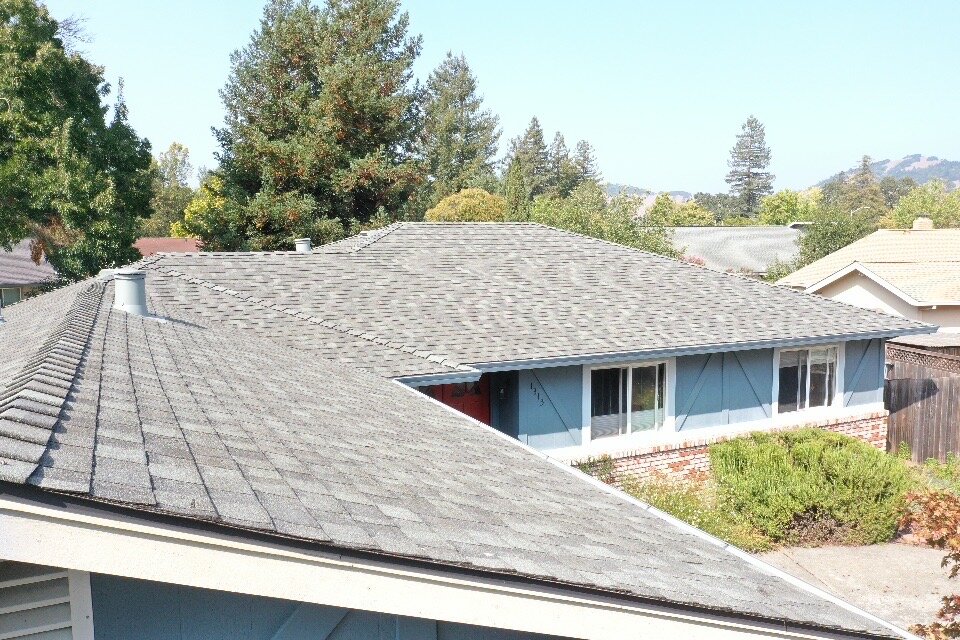
Composition shingles.
Composition shingles, often called asphalt shingles, are layered shingles made with an asphalt-based mat and a surface of mineral granules. They are the most common roofing on pitched homes across the country.
Pros
- Wide range of colors and dimensional styles
- Relatively lightweight
- Damaged shingles can usually be repaired or replaced individually
Considerations
- Needs enough roof slope to shed water
- High winds can lift or remove shingles
- Granules wear off gradually as shingles age
Best for: Pitched residential roofs and a wide variety of home styles.
Pitched roofs
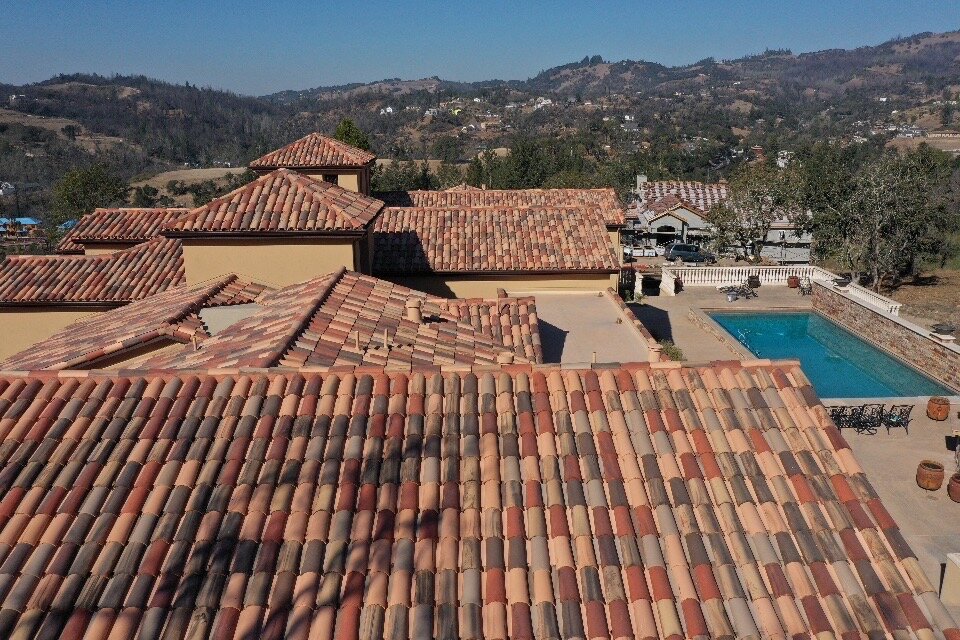
Concrete & clay tile.
Tile roofs use individual concrete or clay tiles, either curved (barrel or “S”) or flat, laid over an underlayment that helps keep water out. They give a home a classic Spanish, Mission, or Mediterranean character.
Pros
- Distinctive, timeless look
- Tile itself is a noncombustible material
- Tiles hold their color and texture well
Considerations
- Heavy, so the roof structure must be able to carry the weight
- Individual tiles can crack if walked on or struck
- The underlayment beneath the tiles needs attention over time
Best for: Spanish, Mission, and Mediterranean-style homes, and roofs built to support tile.
Pitched and low-slope roofs
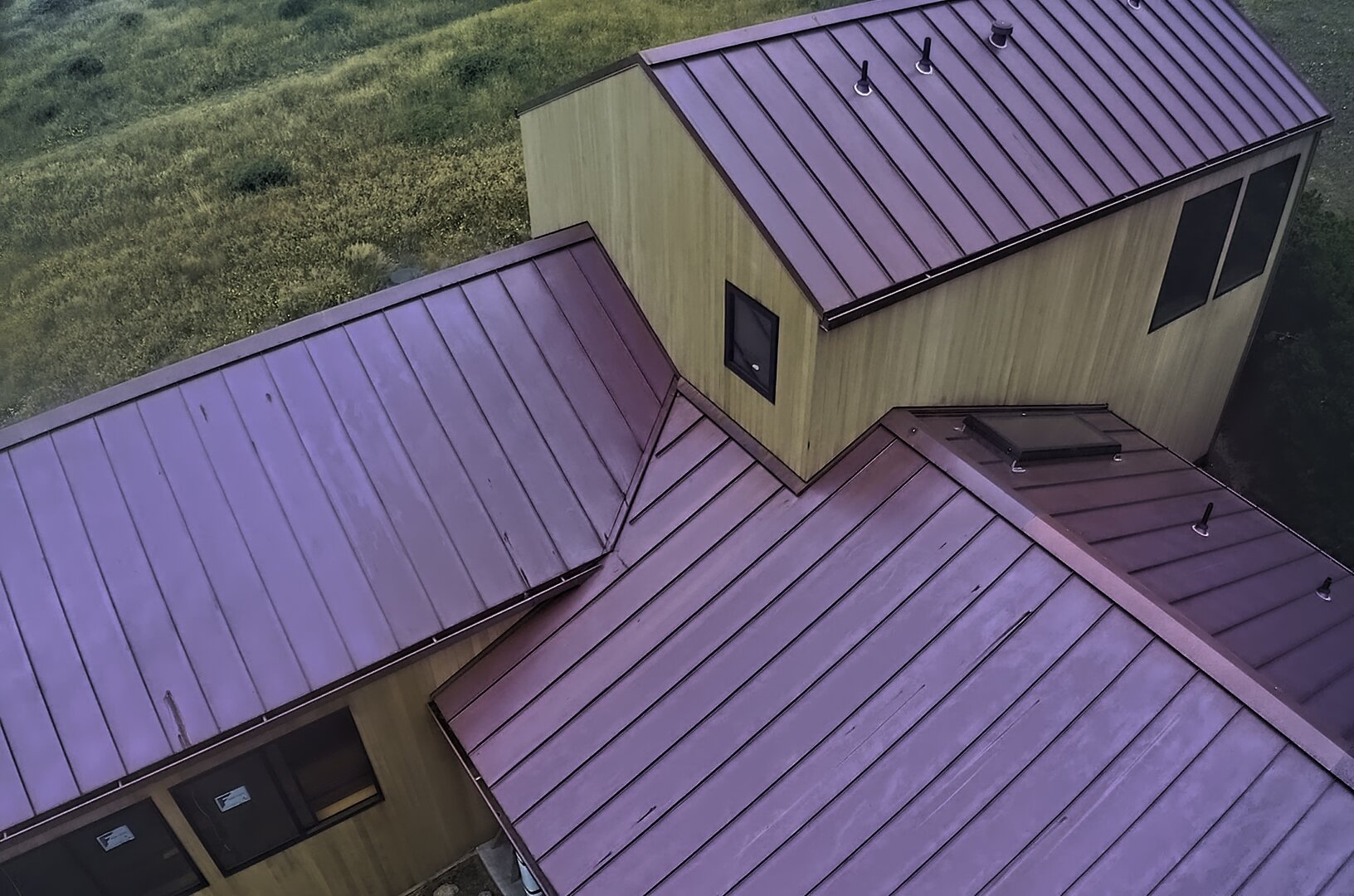
Metal roofing.
Metal roofing includes standing-seam panels, exposed-fastener panels, and metal shingles or shakes. Panels can be steel, aluminum, copper, or other metals, in many colors and finishes.
Pros
- Lightweight for its strength
- Sheds rain and debris readily
- Noncombustible, and many finishes reflect sunlight
Considerations
- Can be noisier in heavy rain without solid decking or insulation
- Some metals can dent from hard impacts
- Panels expand and contract, so seams and fasteners need proper detailing
Best for: Modern and farmhouse styles, outbuildings, and homeowners who want clean lines.
Flat and low-slope roofs
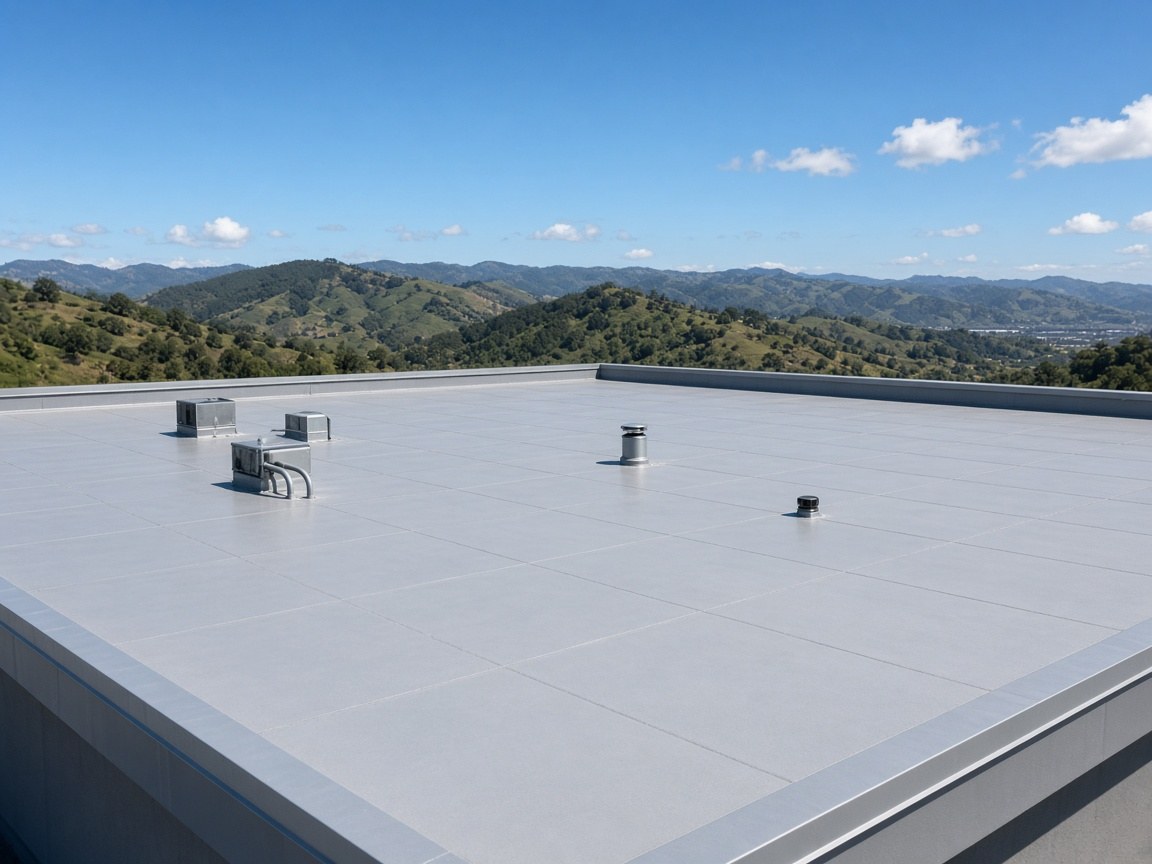
PVC, TPO & Modified Bitumen.
Flat and low-slope roofs need a continuous membrane rather than overlapping shingles or tiles.
- PVC is a single-ply thermoplastic membrane with heat-welded seams. It is usually light-colored, and is often chosen where grease or chemicals are a concern.
- TPO is also a single-ply thermoplastic membrane with heat-welded seams. It is typically white or light gray and widely used on low-slope roofs.
- Modified Bitumen is asphalt-based rolled roofing with added polymers. It is applied in layers and can be torched, self-adhered, or cold-applied, with a granulated or smooth surface.
Pros
- Continuous membranes are made for roofs that are too flat for shingles or tile
- Light-colored PVC and TPO reflect sunlight
- Modified Bitumen’s multiple layers make a tough surface
Considerations
- Good drainage is critical, because standing (ponding) water stresses any flat roof
- Seams, flashings, and drains are the areas to watch
- Rooftop equipment and foot traffic need to be planned for
Best for: Flat and low-slope roofs on homes, additions, porches, garages, and commercial buildings.
Below grade, foundations, decks
Waterproofing.
Waterproofing keeps water out of the parts of a building that are not covered by the roof.
- Below grade and foundations: membranes and coatings are applied to walls below ground level to help keep groundwater and moisture out.
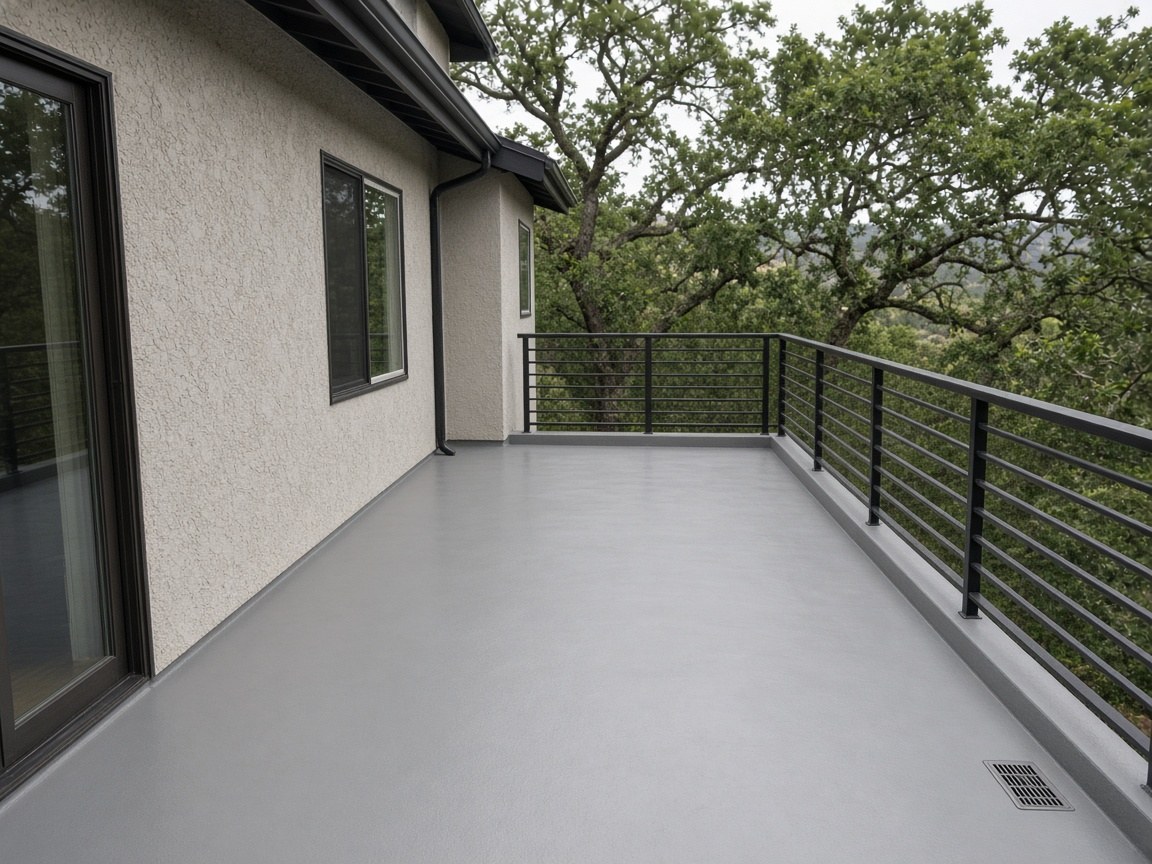
- Pedestrian decks and balconies: walkable waterproof coating or membrane systems protect the structure underneath, especially decks over living space.
Pros
- Helps keep moisture out of basements, crawl spaces, and lower floors
- Deck coatings create a walkable, water-resistant surface
- Can be planned as part of new construction or a remodel
Considerations
- Results depend on surface preparation and drainage
- Below-grade work is easiest while walls are exposed, during construction or excavation
- Walkable deck surfaces wear with use and need periodic upkeep
Best for: Foundations, below-grade walls, and pedestrian decks and balconies, especially over living space.
At a glance
Compare materials.
| Material | Look | Typical use | Upkeep (general) |
|---|---|---|---|
| Composition shingles | Flat-profile shingles in many colors and dimensional styles | Pitched residential roofs | Watch for lifted or missing shingles and granule loss; keep gutters clear |
| Concrete & clay tile | Curved or flat tiles with Spanish or Mediterranean character | Pitched roofs built to carry the weight | Replace cracked tiles; avoid walking on tiles; check underlayment and flashings |
| Metal roofing | Clean lines, standing seams or panels, many colors | Pitched and some low-slope roofs; modern and rural homes; outbuildings | Check seams, fasteners, and sealants; clear debris |
| PVC / TPO | Smooth single-ply membrane, usually light-colored | Flat and low-slope roofs | Check seams and flashings; keep drains clear; avoid ponding water |
| Modified Bitumen | Layered rolled roofing, granulated or smooth | Flat and low-slope roofs | Check seams, flashings, and blisters; keep drains clear |
| Waterproofing | Hidden below grade, or a smooth walkable deck surface | Foundations, below-grade walls, decks and balconies | Keep drainage working; watch deck surfaces for wear or cracks |
General information only — ask us about your roof. This guide gives a general, qualitative overview and is not a recommendation for any specific roof, a quote, or a promise of performance or results. Every home is different, so talk with us about your project.
Ask us about your roof.
Not sure which material fits your home? Call, email, or request a quote and we would be happy to help.